English
Eating disorders therapy can be more than talk
Posted on 03/29/12 05:12:amSome of the most powerful experiences our patients have during their treatment stay are in our art studios, the fitness rooms or on our ropes course.
Experiential therapies are a hallmark of Rogers Behavioral Health’s residential and inpatient programs. Our patients not only work with master’s prepared clinicians and board-certified physicians, they also work with highly trained experiential therapists who facilitate treatment not just through talk, but also through non-verbal means of expression.
Tina Szada, ATR-BC, an art therapist at Rogers’ residential Eating Disorder Center in Oconomowoc, recently participated in a mannequin art competition that illustrates the power of a non-verbal treatment experience.
The “Imagine Me… Beyond What You See” contest was designed to promote healthy awareness and acceptance of body image. The event is part of the International Association of Eating Disorders Professionals (IAEDP)(link is external) annual conference, which wrapped up in late March. Iaedp invited national art therapists from treatment centers and private practice, students and the public to artistically create mannequins that reflect their perception of beauty and body image.
We are excited to share our creation, “Bella” with you here.
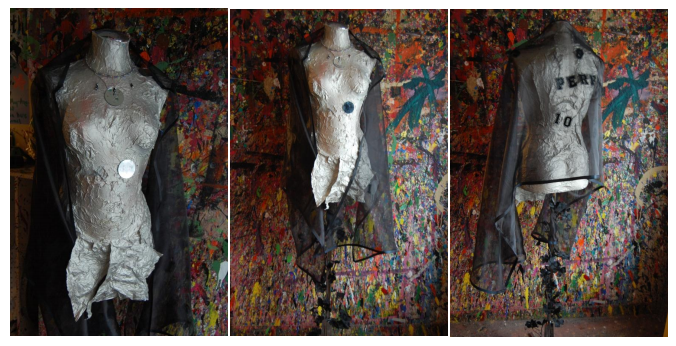
From the artist's statement:
“The mannequin represents the struggle of body image with eating disorder patients from the perception of the therapist,” said Tina, “An eating disorder can grow into a dark cloak that is draped over the body. It becomes this weight that continuously makes the person think and feel that they have to be perfect and focus their life on numbers.”
This creates a feeling of uncomfortableness in their body, she said.
“The whole piece may look glamorous, but the body will never feel comfortable with an eating disorder because it will always be there giving negative feedback,” said Tina.
In treatment, Tina said, therapists help patients look at how the cloak was created and work through the conflicts that wearing the cloak has created in their life. “Asking patients to take off the cloak – to challenge that negative feedback and replace it with affirming statements – helps our patients to start feeling more comfortable in their body.”
How we can help
Learn more about how we treat eating disorders at Rogers Behavioral Health.
For admission information or a free screening, call 800-767-4411, or submit an online screening request.
If you do not feel your child needs treatment right away, but may be concerned, we offer online quizzes to possibly provide some relief. While these quizzes do not provide a diagnosis, it could be the first step in finding the treatment you may need. Take our online Eating Disorder Quiz today.
Topics
Share this article: